What happens when creativity turns into a performance? This post explores the emotional cost of fast-paced creation, the hidden burnout it causes, and why slowing down might be the most radical creative act of all.



Sign up to our newsletter + get See. Make. Be.—a free printable journaling guide for slowing down and tuning in.
You have successfully joined our mailing list.
Check your inbox to confirm your email (if it hasn’t arrived yet, give it a few minutes or check spam).
What happens when creativity turns into a performance? This post explores the emotional cost of fast-paced creation, the hidden burnout it causes, and why slowing down might be the most radical creative act of all.
In the past few years, I’ve found myself in roles where I began questioning my creativity. The torrent of ideas that used to rush through me felt like it had dried up. I’d stare at my computer screen and will something, anything, to appear. Moments like these weren’t just frustrating. They hurt. I felt like I was losing a part of myself.
Thankfully, that creative part of me was still there (it always is). I was just exhausted. I had fallen into the trap of fast creativity.
We live in a fast-paced world. Our careers run on constant output, with little time to refuel. Our minds cycle through endless input but rarely pause for reflection.
Creativity is expected to move at the same pace. Like fast food or fast fashion, fast creativity is quick and cheap but often empty. It benefits neither the maker nor the consumer. It becomes a commodity. Something we’re pressured to monetize.
We feed the algorithm. We chase virality over value. We follow the formulas for likes, views, and comments. Aesthetics replace authenticity. Appearance becomes more important than substance. Make more. Make it faster.
There’s a time and place for fast creativity. Sprints, deadlines, bursts of inspiration. Those moments can be thrilling and energizing. They push us toward innovation. The trouble is, we’re expected to live in that mode. We don’t build in the breaks. And without rest, what once felt exciting becomes unsustainable. We crash.
Fast creativity is a tool, but it’s not a lifestyle.
A study by Teresa Amabile at Harvard found that even when people feel productive under pressure, they’re 45% less likely to come up with creative ideas. Her team described it as a “treadmill effect”: we’re moving fast but going nowhere creatively.
When you’re deep in fast creativity cycles, you become disconnected from yourself. It’s a sprint with no finish line. A loop of production where output matters more than meaning.
I’ve had times when I wasn’t creating; I was just performing. I ignored what I needed to keep going. Over time, my cleverness dulled. My spark faded. I didn’t feel creative anymore. The truth is, it wasn’t gone. My batteries were just drained.
When we slow down, we begin to reconnect. Energy returns. Ideas return. We remember that we are more than what we produce.
The World Health Organization defines burnout as a syndrome caused by chronic workplace stress. Burnout is not simply being tired; it’s emotional exhaustion, mental detachment, and reduced effectiveness.
This is where creative burnout takes hold: when the joy of making becomes mechanical. You keep producing, but it no longer feels like you. We’re not just doing too much; we’re doing too much of what doesn’t nourish us.
For many creatives, especially women and values-driven makers, the act of creating isn’t just about the work. It’s emotional labor. It’s crafting beauty while managing self-doubt. It’s designing something that reflects your soul while absorbing the opinions of others. It’s holding space for your audience, your community, and your team. Sometimes at the cost of yourself.
Creative work is more than just tasks; it is care work. Emotional processing. Storytelling. Meaning-making. That kind of labor often goes unrecognized and uncompensated. No wonder it leaves us drained.
Fast creativity thrives on comparison. You see someone else’s highlight reel and feel behind. You measure your worth in metrics. You second-guess every idea before it even begins.
I’ve felt crushed by the pressure to keep up. The work had to look perfect. It had to perform. If it didn’t? It felt like I failed, not just the task, but as a person.
Perfectionism creeps in. Suddenly, nothing is good enough to share. Or even to start.
In The Gifts of Imperfection, Brené Brown describes this trap well: “Perfectionism is not the same thing as striving to be your best. It’s a way of thinking that says, ‘If I look perfect and do everything perfectly, I can avoid the pain of blame, judgment, and shame.'” That mindset kills creativity before it begins.
The digital world amplifies this spiral. Online, everything is scored. Likes, follows, engagement. We start measuring our creative worth by metrics.
Worse, we mistake curation for identity. We post highlights. We edit reality. Over time, it becomes harder to tell what we really want to create versus what we think will perform.
It’s not just self-doubt… it’s self-loss.
Burnout doesn’t always announce itself. It accumulates slowly. At first, I was just tired. Then I was dreading the work I used to love. I stopped eating well. I stopped creating. Then I couldn’t get out of bed. That’s when I realized I wasn’t just tired; I was boiled like the proverbial frog. The heat had risen slowly until I was cooked.
My burnout wasn’t just about overwork. It was about values. I can push myself for something I believe in. What breaks us are things like working on things that don’t align with our values, continual goal shifting, and promised rewards that never arrive.
Recovery wasn’t what I expected. I thought I’d make use of my newly found free time; instead, I did nothing. So much boring nothing… When the ideas came back, it was overwhelming.
Then there were too many ideas. They came in a rush, especially in the mornings, when the world is quiet. I would sip coffee and think, I could make this… or this… or that…
But when it was time to begin, I’d be overwhelmed. Where do I start? Is this idea good enough? Do I have the right tools? Should I get more supplies? Suddenly I’m lost.
This is what creative overwhelm feels like: when inspiration floods in but turns into indecision. When your mind races, but your body freezes.
Digital culture doesn’t help. We’re flooded with inspiration but starved for direction. And now, we can just order what we need. Tools, tutorials, materials… endless options. But instead of clarity, we get bloat. A kind of digital supply hoarding. Suddenly, we’re overwhelmed not by lack, but by too much.
Where’s that crochet hook? Do I need a better lamp? I think I have that fabric somewhere…
What was supposed to fuel creativity ends up suffocating it.
What helps? Lowering the stakes. Making something ugly on purpose. Doing just one step. Printing the pattern. Cutting the fabric. Giving myself permission to try.
Creativity doesn’t just drop during high-pressure moments. It stays low even after the pressure ends. That same Harvard study found that pressure creates a kind of “cognitive hangover.” Even the day after a stressful sprint, creative output stays suppressed. We need time to mentally recover.
Research also indicates that creatives are at high risk of burnout because we’re often expected to be “always on,” delivering new ideas, managing constant feedback, and navigating uncertainty.
Creativity isn’t a dancing monkey that performs on command. It’s a muscle. Like any muscle, it needs rest to grow stronger.
When we slow down, we experience the process differently. We become present. Intentional. We stop trying to impress and instead begin to express.
Sometimes, slow creativity feels fast. Like getting lost in the flow. Time disappears. Your hands work, your mind wanders, and your heart softens. Other times, it’s a ritual. A practice in patience.
Imagine: hand quilting. The rhythm of stitches. Days, weeks, months, even years devoted to one project. Or mending a favorite piece of clothing. Acts of care. Wishes for longevity.
We’re not just making things. We’re making sense of our lives. Organizing thoughts. Rebuilding confidence. Restoring wonder. Honoring the effort behind the objects we live with.
This is how we remember what we’re capable of. This is how we come home to ourselves.
“The goal of art isn’t to attain perfection. The goal is to share who we are and how we see the world.”
Do something for yourself. Not for an audience. Not for a feed. Just for you.
Let it be ugly. Silly. Weird. Private.
Let it be yours.
Fast creativity might be loud, but slow creativity is lasting.
I’m still learning to honor that pace. To listen for the quieter voice within me. To create not because I must, but because I can.
If you feel drained, stuck, or disconnected, you are not broken. Your creative self is still there. Waiting. Resting. Ready to return when you are.
Trust that.
And make something weird today.

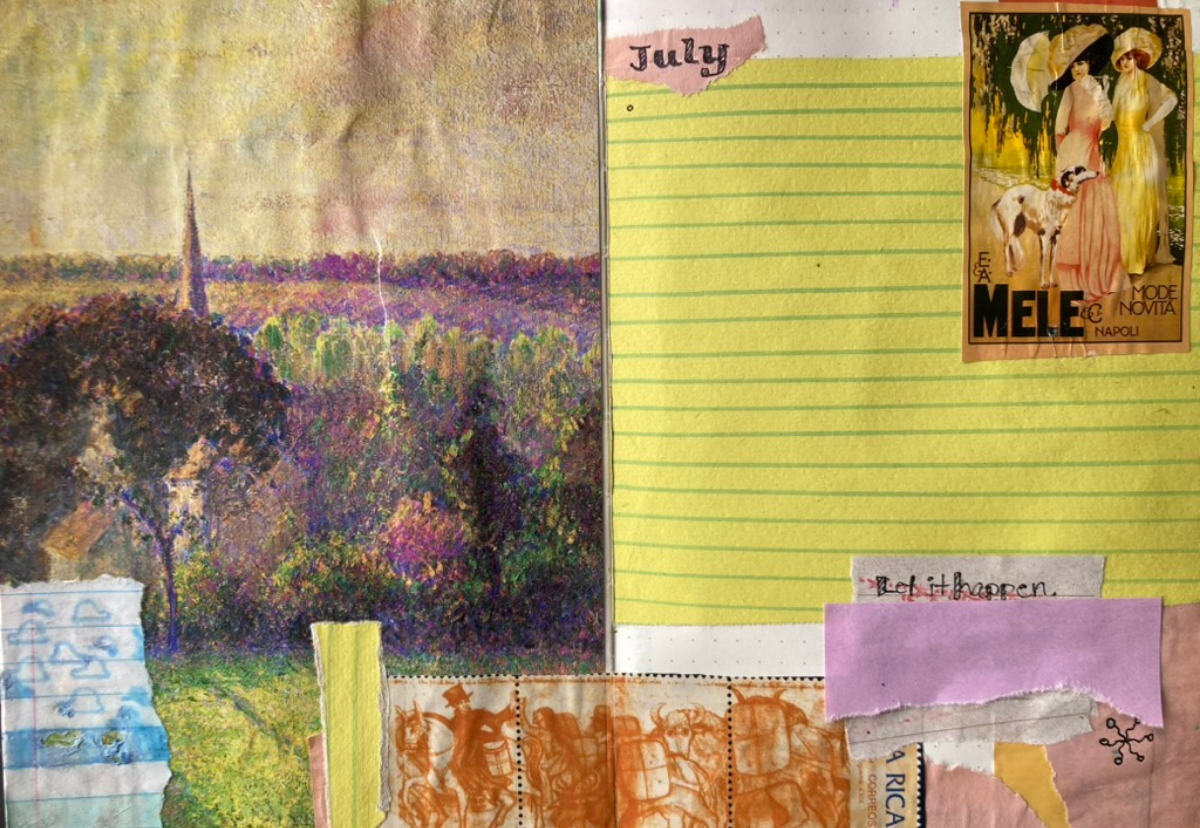
Perfectionism can paralyze creativity. This week, I confronted mine head-on with scissors, scraps, and my journal. I used junk journaling for creativity and to help let go of perfectionism.
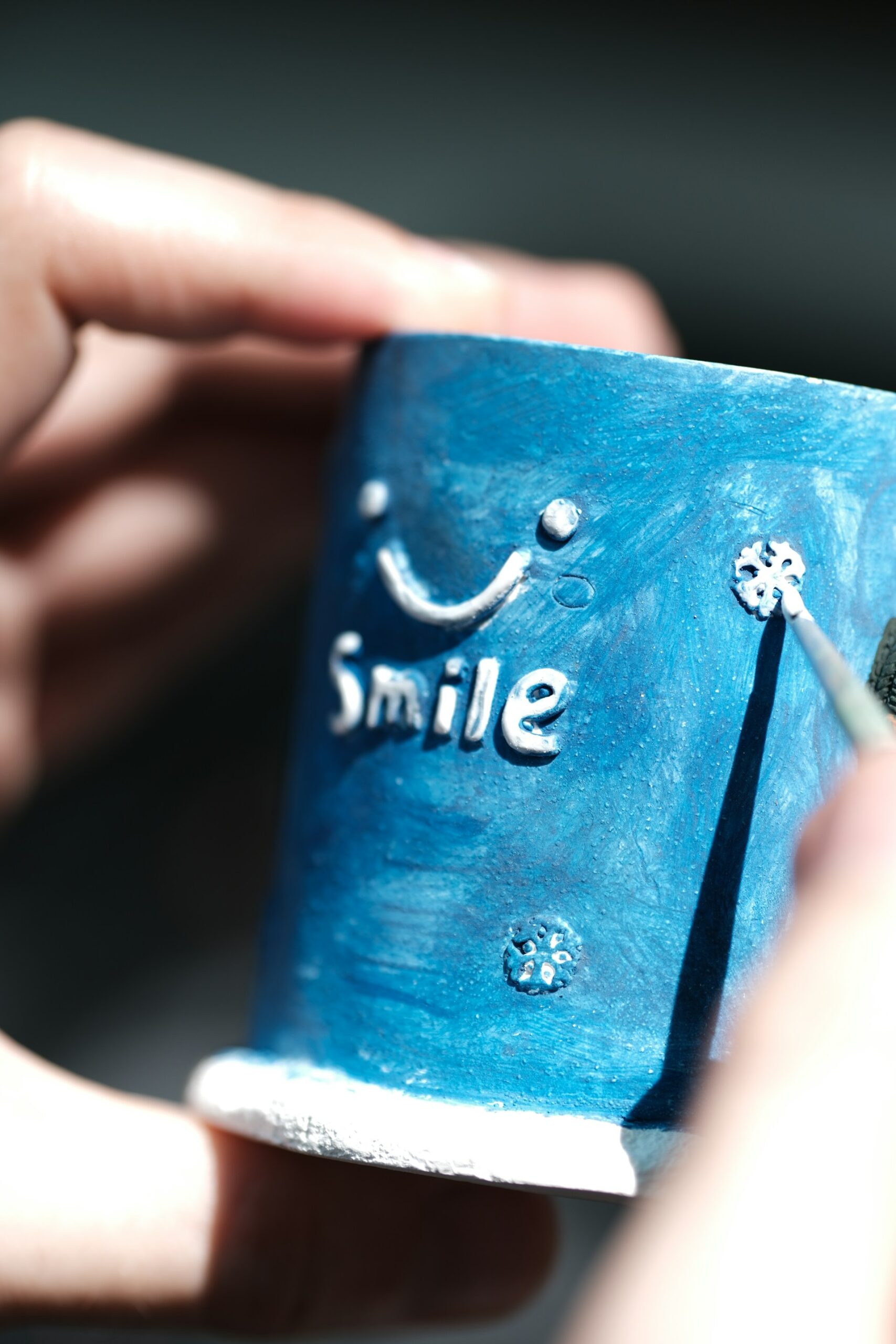
Small creative acts might not change the world overnight, but they might change you. An exploration of creativity, resistance, and becoming.

A personal story of burnout, lost creativity, and the spark that became Buen Ojo. A space for making, meaning, and becoming whole again.